Building healthy soil for healthy crops, healthy communities, and a sustainable future
Caption: Compost production at Shekinah Farms transforms organic materials into a valuable resource for improving soil health and crop productivity.
At Shekinah Farms, we often say that healthy farms begin with healthy soil. While crops may be the most visible part of agriculture, the real foundation of a productive farm lies beneath our feet.
One of the most important tools we use to maintain soil health is compost.
Compost allows us to recycle organic materials and return valuable nutrients to the soil. Instead of viewing plant residues, crop waste, and other organic matter as waste, we see them as resources that help build fertile, living soil capable of supporting healthy crop growth season after season. This simple but powerful practice plays a critical role in our commitment to sustainable agriculture.
Turning Waste into a Valuable Resource
Every growing season generates organic materials that can be reused to benefit the farm.
Plant residues, leaves, weeds, and other biodegradable materials are collected and carefully composted rather than discarded. Over time, these materials break down naturally into a nutrient-rich soil amendment that helps replenish the land.

Caption: Organic materials are collected and composted to create nutrient-rich amendments for farm soils.
By composting organic matter, we reduce waste while creating a sustainable source of nutrients that supports crop production and soil health.
How Compost Improves Soil Health
Healthy soil is much more than dirt. It is a living ecosystem filled with microorganisms that help plants access nutrients and thrive.
Compost contributes to this ecosystem by:
- Improving soil structure
- Increasing water retention
- Reducing soil erosion
- Supporting beneficial microorganisms
- Providing a slow release of essential nutrients
- Enhancing long-term soil fertility
Caption: Compost improves soil structure and supports the biological activity needed for healthy plant growth.
These benefits are especially important as farmers face changing weather patterns and increasing pressure to produce more food sustainably.
Supporting Sustainable Crop Production
At Shekinah Farms, compost is integrated into many aspects of our production system.
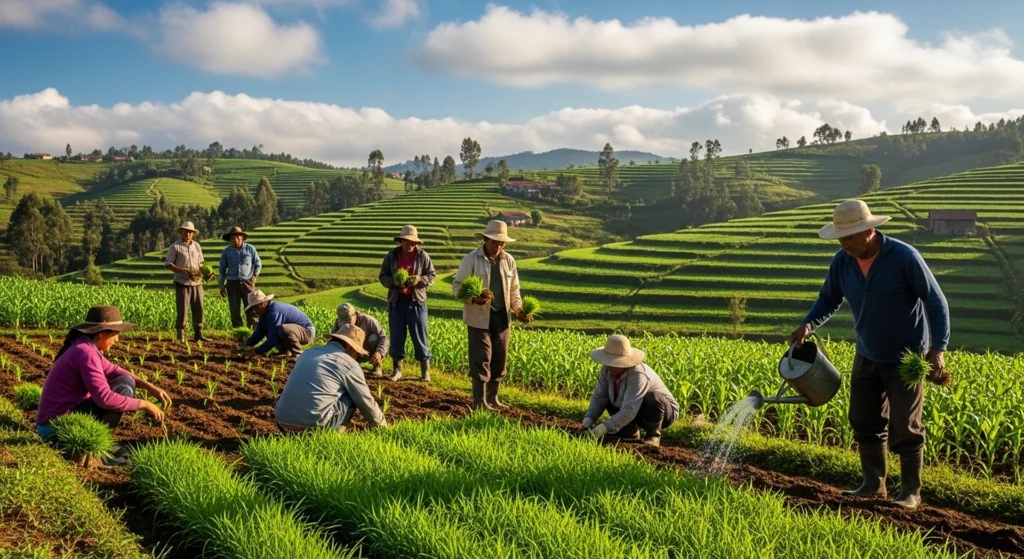
We apply compost to vegetable beds, demonstration plots, and community garden projects to improve soil fertility and support healthy crop development.
The results can be seen in stronger plants, improved yields, and healthier soils that remain productive over time.

Caption: Compost-enriched soil supports vigorous crop growth and long-term agricultural productivity.
Using compost also helps reduce dependence on synthetic fertilizers, making farming systems more environmentally sustainable and economically resilient.
Farming with Future Generations in Mind
Sustainable agriculture is not only about today’s harvest. It is about ensuring that future generations can continue to grow food on healthy, productive land.
By investing in soil health today, we help create farming systems that are more resilient to environmental challenges while protecting natural resources for years to come. Composting is one of the simplest and most effective ways to achieve this goal.
Caption: Composting knowledge is shared with farmers and community members as part of Shekinah Farms’ commitment to sustainable agriculture.
Through our demonstration farms, training programs, and community initiatives, we encourage farmers to adopt practical soil management practices that strengthen food security and support sustainable livelihoods.
Why Compost Matters
Compost is more than a soil amendment.
It is a tool for:
- Building healthy soils
- Producing nutritious food
- Reducing waste
- Conserving natural resources
- Strengthening farm resilience
- Supporting future generations
At Shekinah Farms, compost represents our belief that caring for the soil is one of the most important investments we can make in the future of agriculture.
Practice Snapshot
Practice: Composting
Purpose: Improve soil fertility and crop productivity
Benefits:
- Enhanced soil structure
- Improved water retention
- Increased biological activity
- Reduced dependence on synthetic fertilizers
- Greater long-term sustainability
Used In:
- Demonstration farms
- Vegetable production plots
- Community gardens
- Farmer training programs
Follow Our Journey
Stay connected with Shekinah Farms for more insights on sustainable agriculture, soil health, climate resilience, and practical farming solutions that help communities grow stronger from the ground up.