Saving the Harvest. Nourishing Communities.

Millions of smallholder farmers grow nutritious food that never reaches the table. By reducing post-harvest loss and strengthening nutrition systems, we help ensure that harvests feed families instead of going to waste.

When Food Is Lost, Nutrition Is Lost

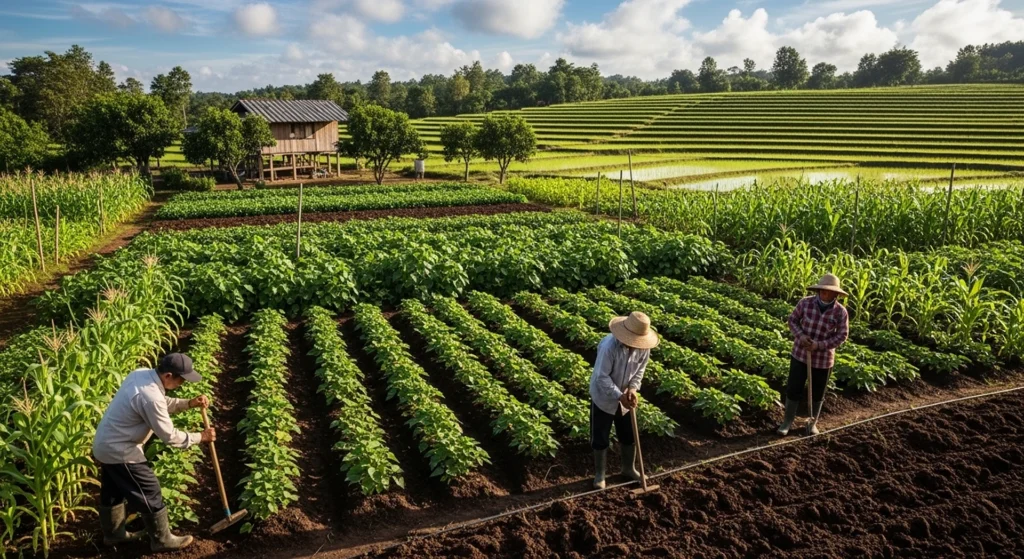
Across farming communities, farmers work tirelessly to grow food that sustains families and local economies.

Yet a significant portion of that harvest is lost after harvest because farmers lack:

  • preservation technologies
  • adequate storage
  • local processing capacity

When food spoils before reaching markets, communities lose more than crops—they lose access to nutritious foods that support healthy diets.

This gap between farms and nutrition weakens food security and limits economic opportunities

Reducing Post-Harvest Loss

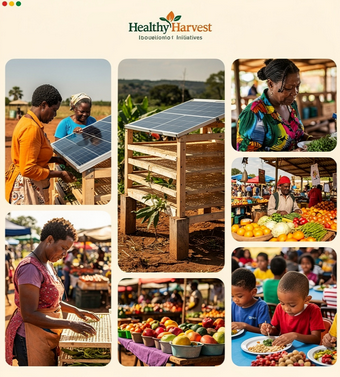
The Save the Harvest Campaign helps farmers protect their crops and reduce food waste by strengthening preservation and processing systems.

Through this initiative, Shekinah Farms Incorporated works with farming communities to provide:

farmer training in post-harvest management
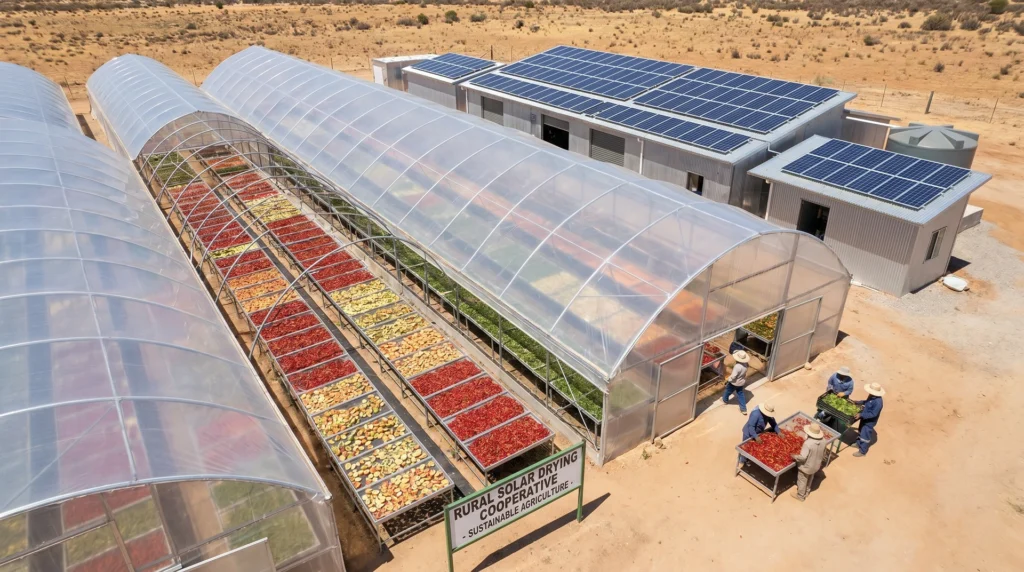
Solar Preservation
Processing Hubs
Storage Solutions
By preserving harvests, farmers gain the ability to sell their crops when market conditions are favorable rather than rushing to sell before food spoils.

Protecting Nutrition from Farm to Table

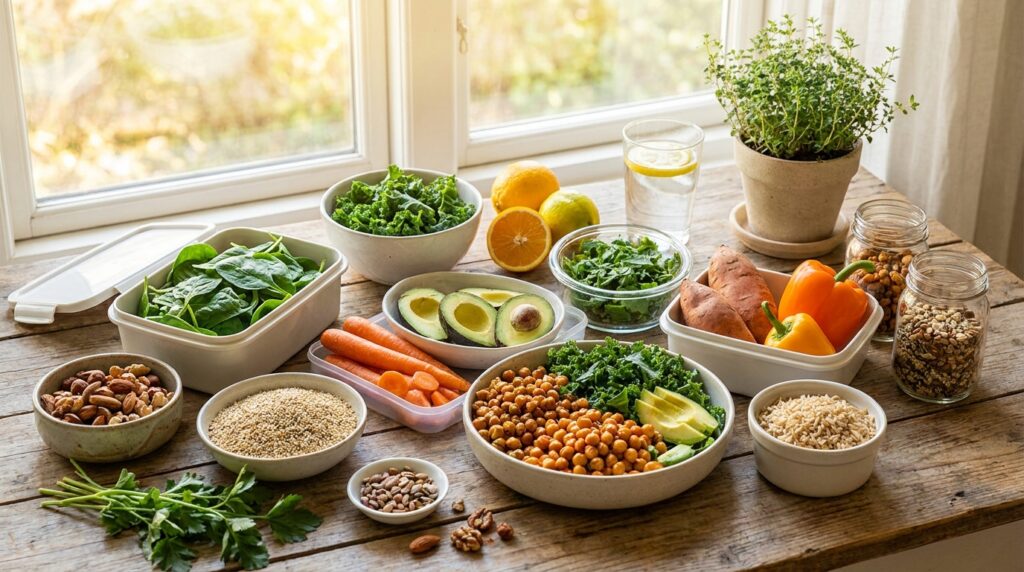
Nutritious foods such as fruits, vegetables, and legumes are often the most vulnerable to post-harvest loss.

When these foods spoil, communities lose vital nutrients needed for healthy diets.

The Food Is Medicine Campaign focuses on strengthening nutrition by ensuring that more nutrient-rich foods reach families and local markets.

By preserving harvests and strengthening food distribution systems, we help communities maintain access to foods that support healthy growth and wellbeing.

What Happens When Harvests Are Preserved

Reducing post-harvest loss creates ripple effects throughout the food system.

Preserving harvests strengthens both food security and community health.

more food available for communities 1
more food available for communities

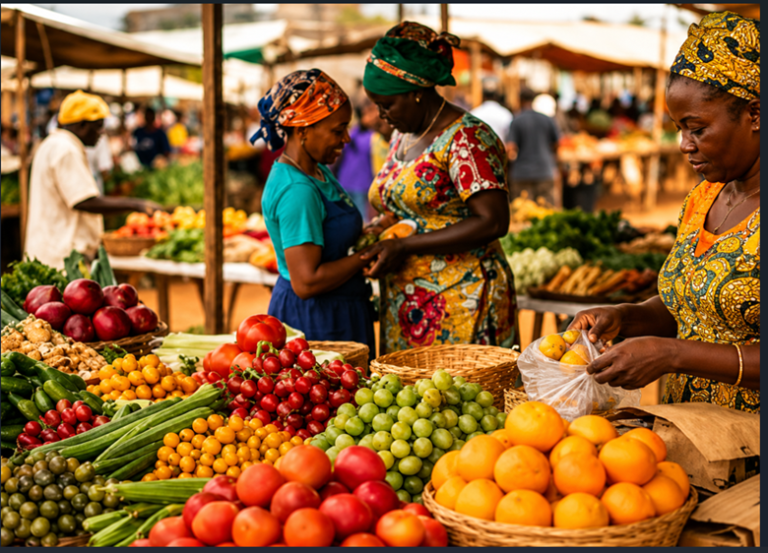
Crops that would’ve spoiled in transit or storage now reach local markets, school feeding programs, and household tables. That means fewer empty stalls and more consistent supply year-round.
Improved Access to Nutritious Foods
Cold storage, solar drying, and better handling help preserve fruits, vegetables, and staples beyond harvest season. Families gain more consistent access to nutritious foods, improving diet diversity, child nutrition, and household well-being.
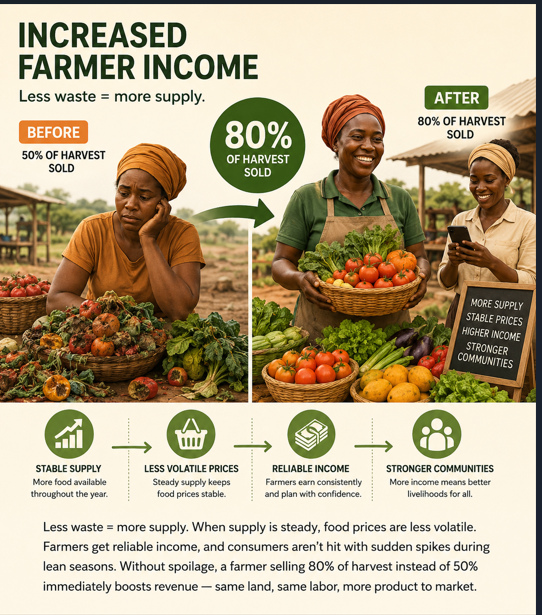
Increased Farmer Income 2
Increased Farmer Income

Reducing post-harvest loss means more food reaches the market. With steadier supply, farmers earn more reliable income, prices remain more stable, and more value is created from the same land and labor.
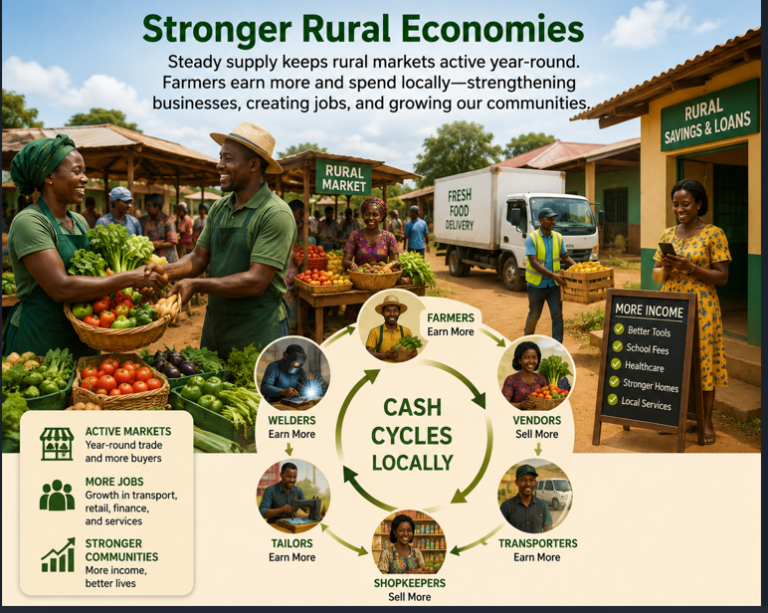
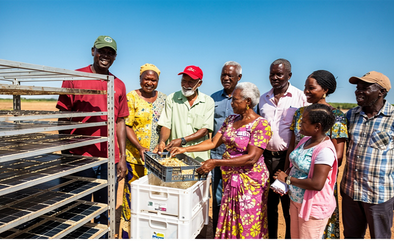
Stronger Rural Economies 2
Stronger Rural Economies
Steady food supply keeps rural markets active year-round, creating income for farmers, traders, transporters, and local businesses. As farmers earn more, they spend more locally—strengthening the wider community economy.

Your Support Makes a Difference

Your contribution helps farmers preserve their harvest and strengthen local food systems. Example impact levels:
$50
$50

Support training for farmers in crop preservation techniques.
$250
$250
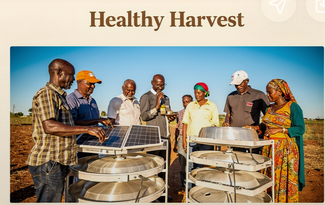
Help equip farmer cooperatives with preservation tools.
$1000
$1000

Support community agro-processing equipment that helps preserve harvests.

Global Impact

The Healthy Harvest Initiative contributes to global development priorities championed by the United Nations Sustainable Development Goals, particularly:

Food Should Feed People — Not Spoil After Harvest.

By preserving harvests and protecting nutrition, we can strengthen food systems and improve lives.

Together, we can ensure that every harvest nourishes families and communities.

$400K to Launch Healthy Harvest in Southwest Cameroon

2 solar-powered hubs. 100+ farmers. Cut post-harvest loss from 40% to <5%. Full traceability with The Gadfly Project.